Ghost Hunt on the High Seas
Seabird Research at Justus Liebig University Giessen
In the heart of Germany, Giessen is home to leading experts in marine biology and zoology.

Credit: Juan Masello
Professor Dr Petra Quillfeldt and her research group at Justus Liebig University Giessen (JLU) study a variety of seabird species and subspecies to gain a deeper understanding of their populations and ecology – in order to define species more precisely, understand their feeding behavior, and collect and analyse dynamic population data.
Seabirds present unique challenges for researchers because they spend almost the entire year at sea and return to land only for breeding, not even to feed. As a result, these species are particularly vulnerable to changes in the marine ecosystem. Professor Quillfeldt and her team collaborate internationally and use innovative methods and technologies – including GPS tracking and metabarcoding of fecal and regurgitation samples – to better understand seabird populations and ecology, ultimately supporting species conservation.
Far from Oceans, International Cooperation is a Must
The Behavioral Ecology and Ecophysiology Research Group at JLU, led by Petra Quillfeldt, studies a wide range of bird species such as the European turtle dove and parrots. In addition, numerous projects focus on birds that occupy the airspace above pelagic zones.
Biodiversa+ Project "Seaghosts"
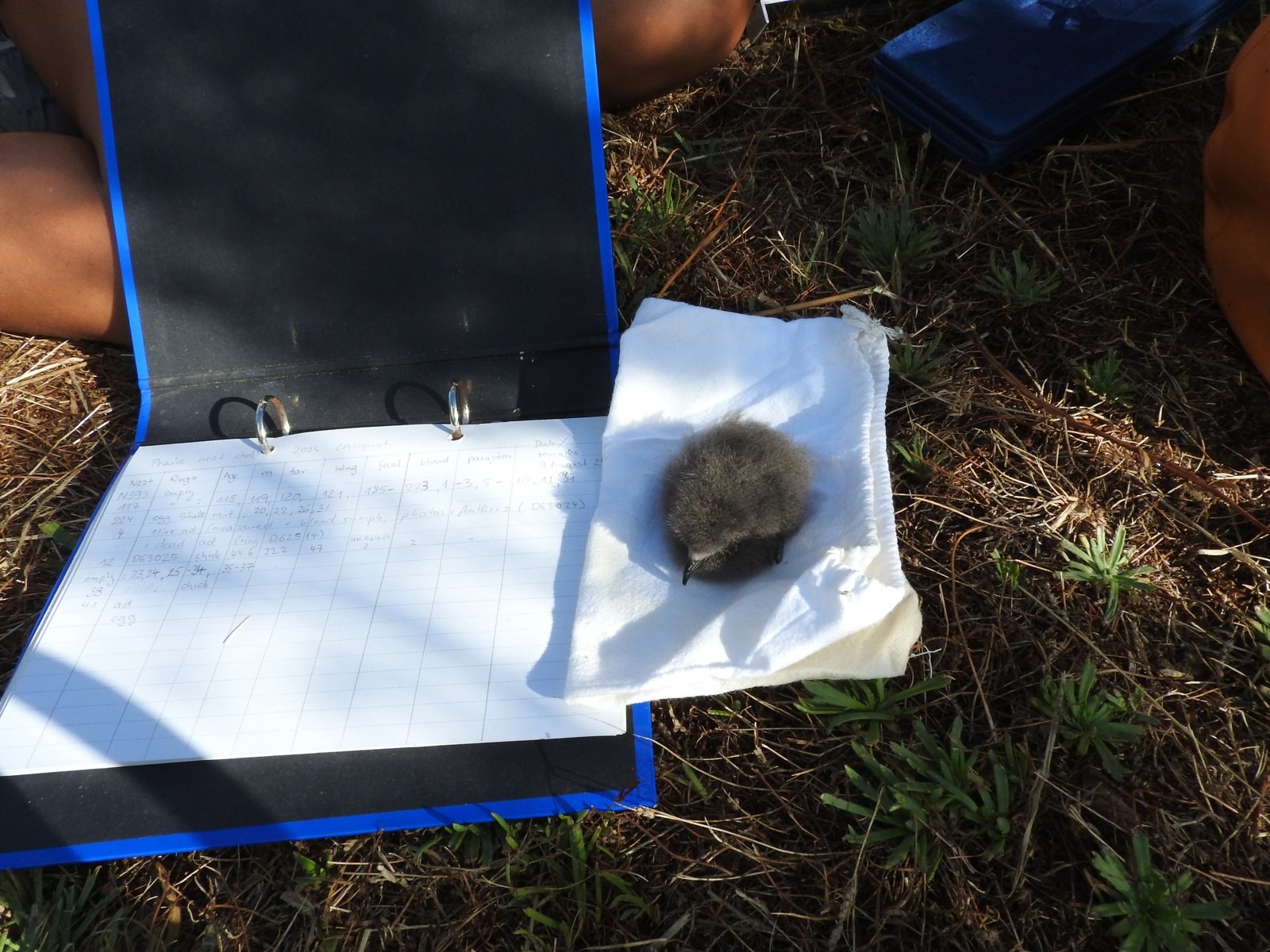
The Seaghosts project is a European research initiative focused on studying storm petrels, the two smallest families of seabirds (Hydrobatidae and Oceanitidae), in the Mediterranean and the Atlantic. From 2024 to 2027, a research team from 13 countries will jointly investigate the ecology, breeding biology, and human-related threats affecting these species. Through close collaboration between Petra Quillfeldt’s team and researchers at the University of the Azores, the project aims to deepen our understanding of the birds’ behavior, habitat, and population dynamics, as well as the impacts of human activities such as offshore wind farms and climate change.
Credit: AG Quillfeldt
The storm petrel is the smallest seabird species. Until recently, very little was known about its ecology, as GPS tracking devices have only recently become small enough to be used on these birds.
By applying advanced methods such as GPS tracking and DNA metabarcoding, the team aims to close existing knowledge gaps and create a clearer picture of speciation processes – including the clarification of uncertainties surrounding subspecies and potentially new species. The project’s findings are intended to contribute to conservation efforts and the development of protection strategies for storm petrels, with the goal of safeguarding these vulnerable species by providing valuable insights to policymakers and conservation practitioners.
DFG Priority Program Antarctic Research
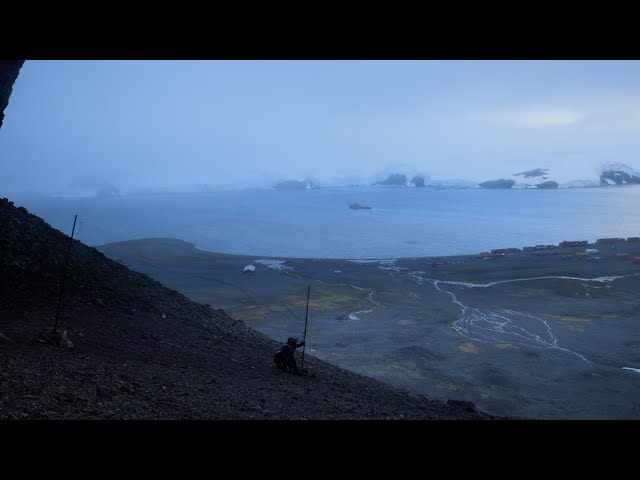
In addition to the Seaghosts project, Petra Quillfeldt is also active in marine bird research in Antarctica. She serves as coordinator of the biological sciences in the DFG Priority Program for Antarctic Research and is the vice president – and soon president – of the German National Committee for Polar Research (SCAR/IASC). As part of a long-term project that began in 1995, Quillfeldt investigates the ecology of two storm petrel species, the Wilson’s storm petrel and the black-bellied storm petrel, which breed in Antarctica. To gain a better understanding of these species’ distribution, migration patterns, and diet throughout the year, advanced technologies such as GPS and GLS tracking as well as DNA composition analyses of fecal and regurgitation samples are used. The video below documents fieldwork carried out by the international team at the Carlini Station on King George Island. The collected data show that these birds migrate over vast distances – some travel from Antarctica to the Arctic regions of Canada, while others remain exclusively in the Southern Hemisphere, migrating north only as far as the coast of Brazil.
(Turn on subtitles on YouTube; video footage provided by the National University of Tierra del Fuego)
Given the vast distances covered during these birds’ migratory movements, research projects and collaborations are necessarily international in scope, involving cooperation and joint initiatives across multiple countries and continents. Petra Quillfeldt’s engagement in Antarctic research began during her diploma thesis, when she worked at an Argentinian research station and, as she notes, learned Spanish. This has since facilitated connections and collaborations with South American researchers. In addition to seabird projects in the Mediterranean and Antarctica, her research group is also involved in further projects in South America, including studies on prions, albatrosses, and penguins in Chile, Mexico, and the Falkland Islands.
Internationality is practically built in simply through the choice of species.
Despite the geographical remoteness of their study species, the Giessen-based research group is exceptionally well positioned to carry out the international collaborations essential for its diverse seabird projects. While Germany has a strong tradition in polar research, such as through the DFG Priority Program on Antarctic Research, its infrastructure is not specifically tailored to marine ornithology. Over decades, Professor Quillfeldt has built a network that enables her to use research stations in other countries – such as Argentina and Spain – for fieldwork. Another outcome of these international collaborations is a tightly interconnected network of experts working, for instance, on blood parasites in Spain or hormone analyses in Austria. This global cooperation allows her projects to draw on a broader spectrum of expertise and resources and has led to further partnerships beyond the initial fieldwork.
Key findings and projects in species conservation
The research on storm petrels conducted by Professor Quillfeldt and her team has highlighted significant implications for conservation. Because these birds live in highly pelagic environments and spend most of their lives at sea – feeding on marine resources such as zooplankton and small fish – they are exposed to numerous threats to their marine habitats, including climate change, pollution, and habitat degradation. In Antarctica, ocean warming is altering the distribution and abundance of krill, a key food source for storm petrels; some regions are experiencing winter temperature increases of 6 to 8 degrees Celsius. Other threats, such as pesticide contamination, microplastics, and light pollution from coastal cities and industrial facilities, also have dramatic effects on the physiology and navigation of storm petrels, leading to significant population-level changes.
Since 1978, the population of storm petrels in our Antarctic study areas has declined by around 90 percent
To counteract these human-driven threats, conservation measures must be tailored to the specific needs of each species, Professor Quillfeldt explains. For example, reducing light pollution in coastal settlements can be achieved through simple measures, such as deliberately switching off lights during the fledging period when young birds head out to sea. Seasonal regulation of wind farms and other offshore installations can also help minimize impacts on migratory birds. Addressing climate change – the underlying cause of many of the seabirds’ feeding challenges – requires a broader approach involving international cooperation and political action. Research on storm petrels provides valuable insights into the ecology and behavior of these species, offering precise data for conservation planning. GPS tracking, for instance, helps identify key habitats and migratory routes, supporting the designation of protected areas. The research also emphasizes the importance of considering the complex interactions between species and their environment – including the effects of climate change on food webs and ecosystems.
The definition of species is far from complete
One of the central findings of this research is that some storm petrel species are not as clearly defined as previously assumed. Certain populations show distinct differences in breeding behavior, morphology, and genetics. For example, a storm petrel population on the Azores has been found to consist of two separate species – one that breeds in summer and another that breeds in winter. Likewise, the European storm petrel population will likely be split into two species, one from the Mediterranean region and one from the Atlantic. This has significant implications for conservation, as it highlights the need for more targeted and effective protection measures. The first publication of the Biodiversa+ project is currently in preparation and will provide a comprehensive overview of the research findings and their implications for species conservation. The research is ongoing, and future publications will offer more detailed insights into the ecology and conservation of these fascinating and elusive birds.