Microbes for Climate (M4C)
The climate crisis is essentially caused by human-caused imbalances in the global carbon cycle. Microorganisms play a pivotal role in this process, as they produce and convert billions of tons of greenhouse gases, such as carbon dioxide (CO₂) and methane (CH₄), every year. However, they also offer opportunities to convert these greenhouse gases into harmless molecules. Their integral role in natural ecosystems, agriculture, and biotechnologies makes them both part of the climate crisis and a potential key to its solution.
The Microbes for Climate (M4C) Cluster of Excellence brings together researchers who are striving to establish the knowledge base for a balanced future carbon cycle, with the aim of counteracting further global warming.
At M4C, we are unravelling the fundamental mechanisms through which microbes contribute to the carbon cycle. Using synthetic biology, we are developing more efficient, sustainable ways to convert CO₂. However, we can only develop more efficient alternatives if we understand exactly how these mechanisms are operated by microbial cells and influenced by the environment. Synthetic biology enables us to test pathways that either do not exist in nature or have become extinct. The Cluster of Excellence's duration of at least seven years gives us great flexibility to advance this research in a dynamic manner. We consider this a great vote of confidence.
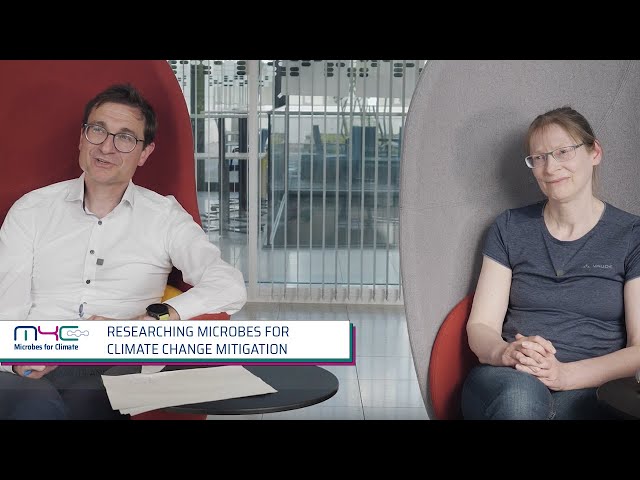
Prof Dr Anke Becker, Spokesperson, Marburg University
Despite converting half of the world's CO2 and thus having an enormous impact on the global climate, microorganisms are underrepresented in research. M4C aims to raise awareness of the importance of these organisms, improve our understanding of their role in the carbon cycle, and utilise and expand their potential through synthetic biology.
We have a great opportunity here. Throughout evolution, microbes have dramatically altered the global carbon cycle multiple times. We can still trace the history of these events in the sequences of microbial enzymes. New computer-based methods enable us to delve into their genetic past and resurrect long-extinct microbial enzymes in the laboratory. We hope this will help us answer crucial questions: How did CO₂-converting enzymes and metabolic pathways evolve? How did certain processes succeed, and what prevented alternative carbon metabolism from developing in a particular environment?
Prof Dr Tobias Erb, Spokesperson, Max Planck Institute
M4C is jointly operated by Marburg University and the Max Planck Institute for Terrestrial Microbiology, with their shared centres, the Centre for Synthetic Microbiology (SYNMIKRO) and the Microcosm Earth Centre (MEC). Researchers from Justus Liebig University Giessen and the University of Münster are also involved. The cluster is supported by two LOEWE top professorships and two LOEWE focus areas, Tree-M and RobuCop, as part of the Hessian excellence programme LOEWE (Landesoffensive zur Entwicklung wissenschaftlich-ökonomischer Exzellenz, State Initiative for the Development of Scientific and Economic Excellence).